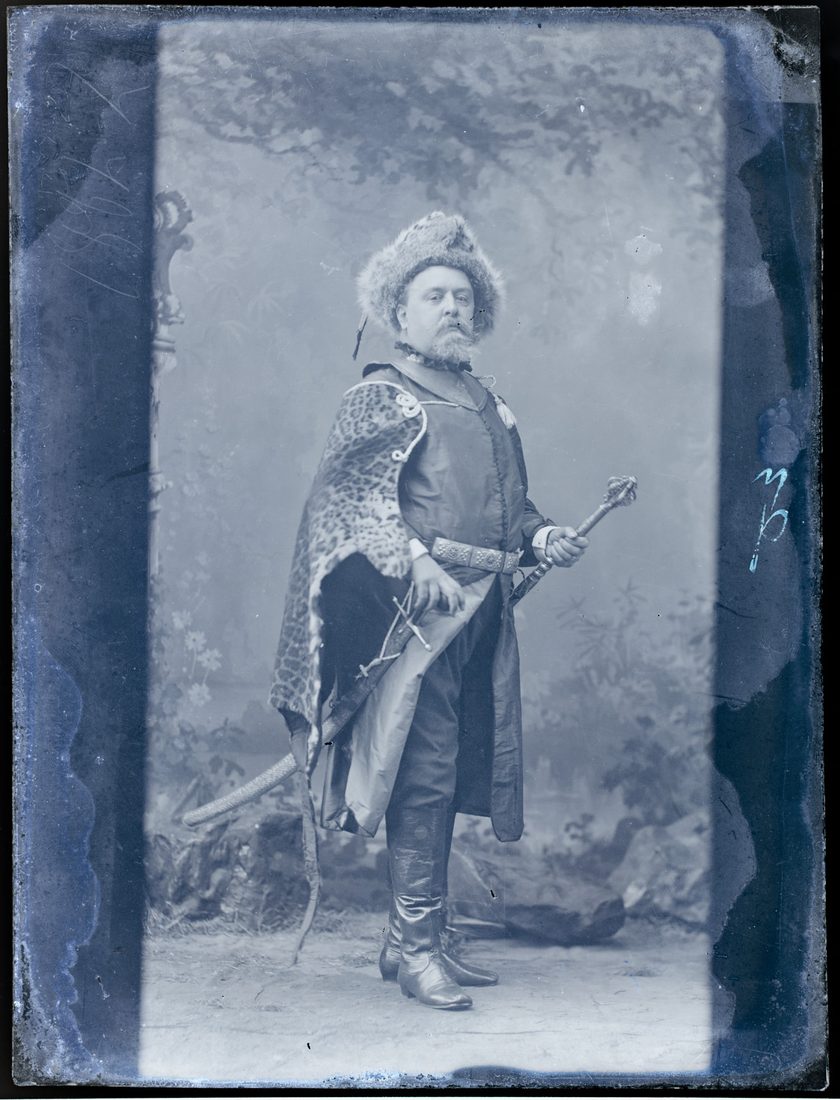
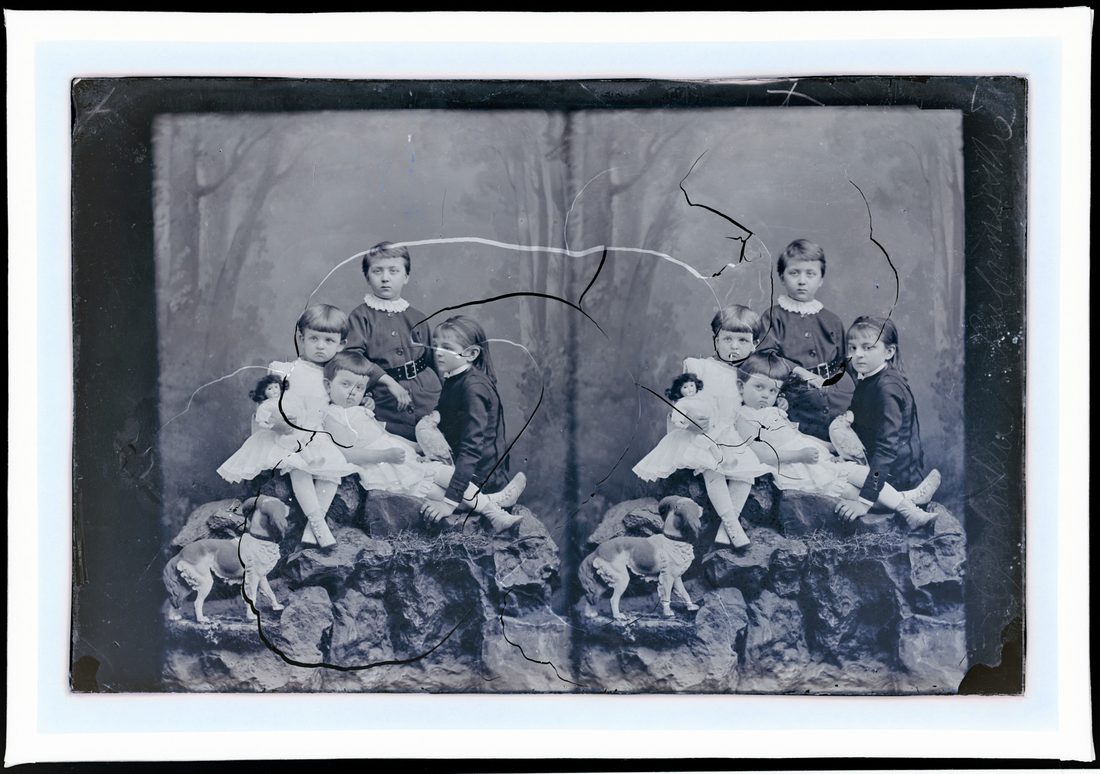
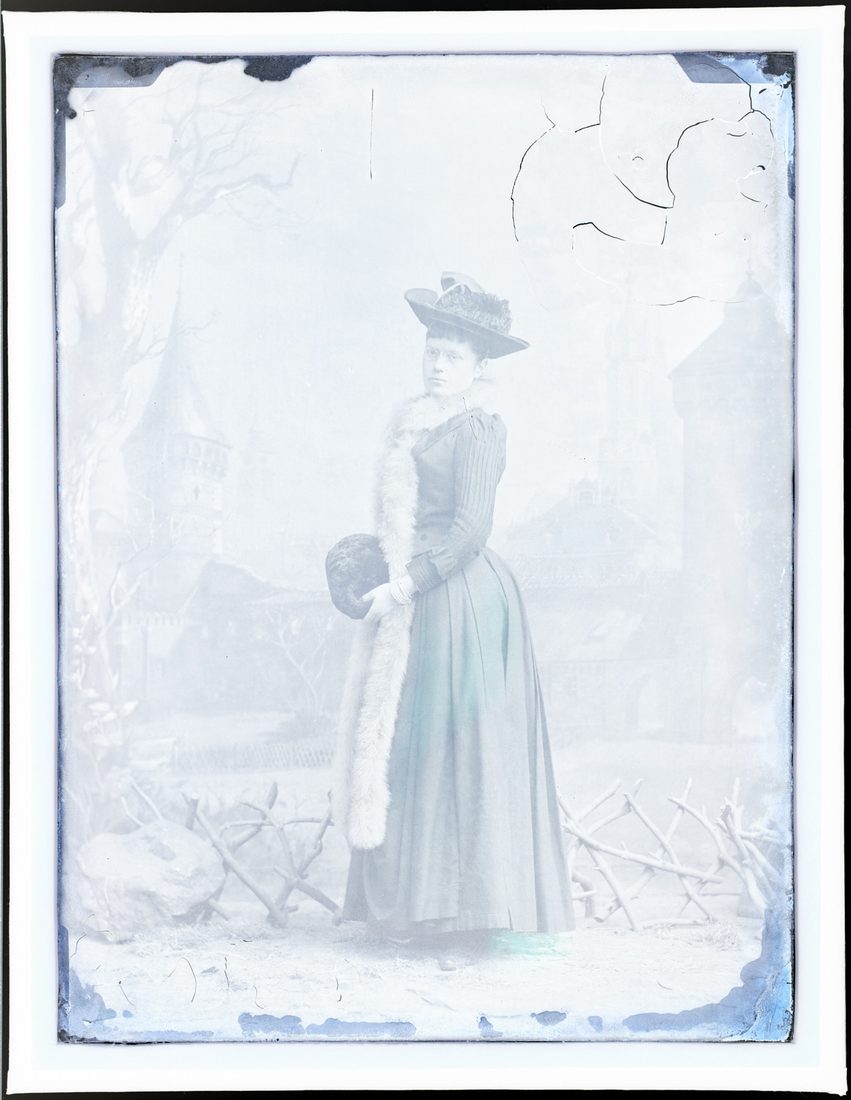
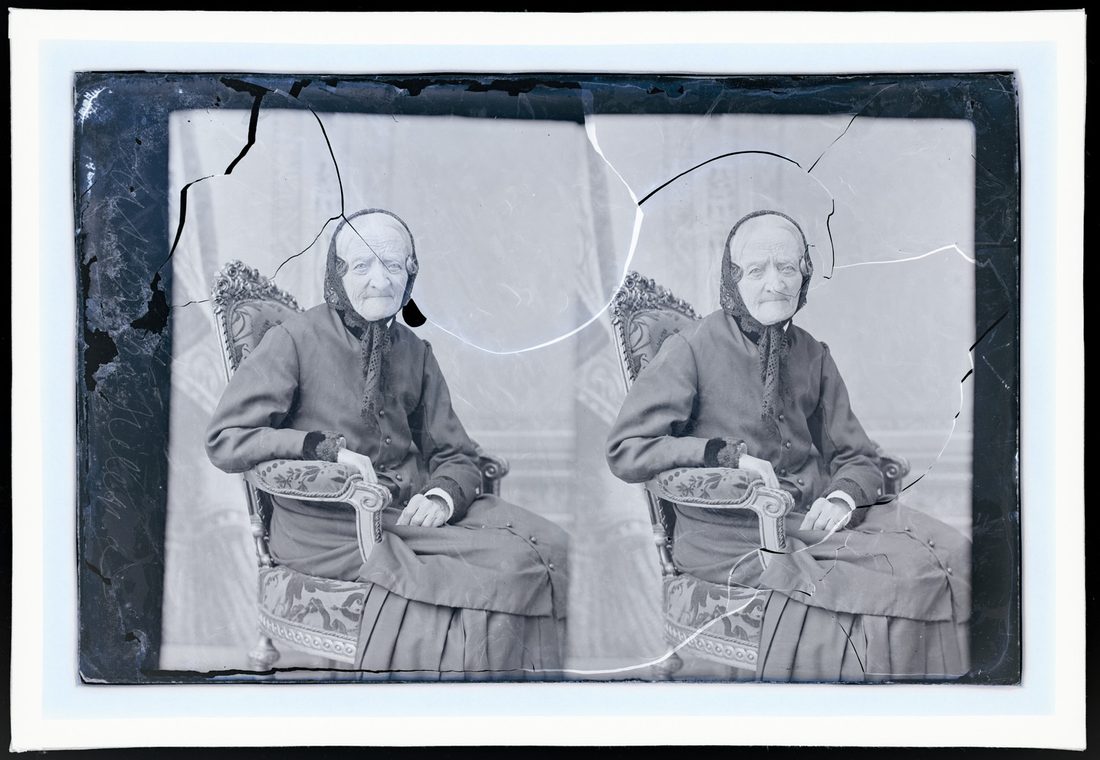
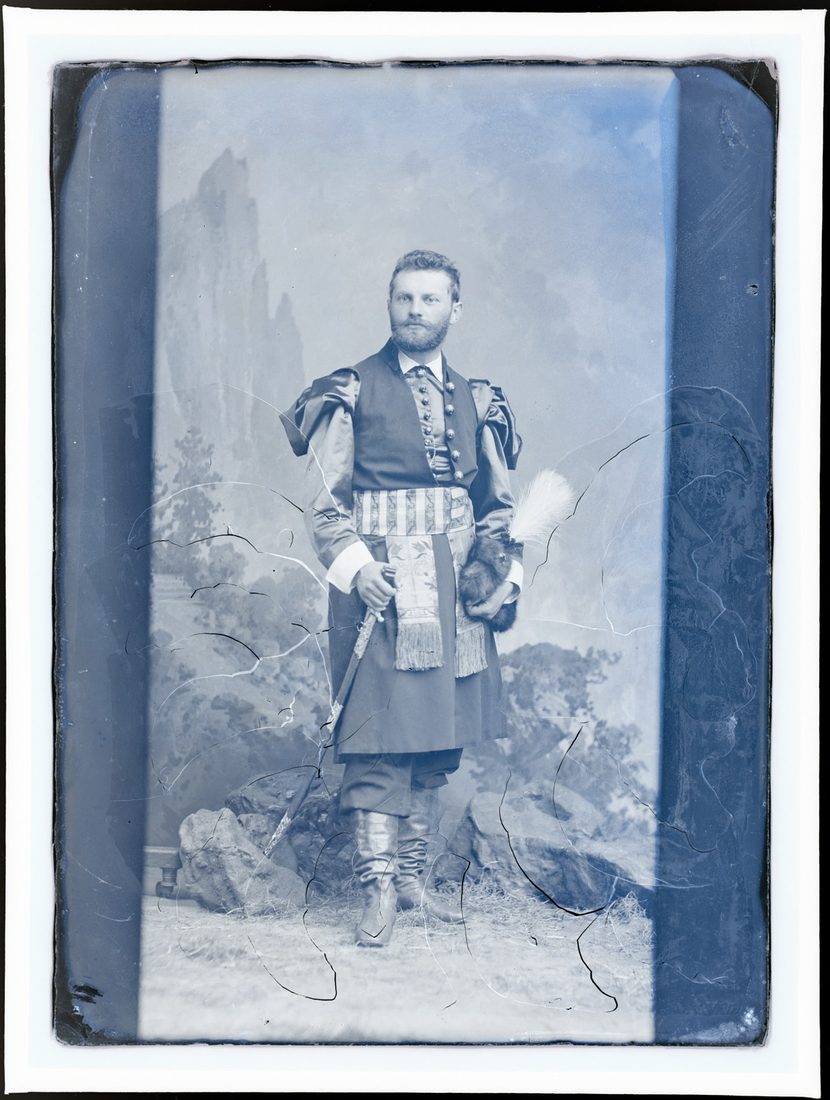
The illustrative material comes from the collections of MuFo (Muzeum Fotografii w Krakowie, the Museum of Photography in Kraków), which has made several dozen objects available on Europeana as public domain. They are mainly portraits taken in a Kraków studio in the 1870s and 1880s, together with several reproductions of paintings and views of Kraków. The set illustrates typical cataloguing problems well: surnames marked with a question mark, two exposures of the same sitters, and descriptive titles such as “Mężczyzna, portret” (‘Man, portrait’).
1. Scale of holdings
Muzeum Narodowe w Warszawie (the National Museum in Warsaw, MNW) is to digitise over 40,000 objects, including photographs, by May 2028 within the Apollo project. Ghent University Library is processing almost 62,000 glass plates with the aid of AI, since manual description at this scale would not be feasible. The Texas State University archive holds approximately 1.8 million negatives. With holdings of this size, adding one full-time post to the registration department has a negligible effect on the rate of processing.
2. Workflow stages
The processing of a photograph in a museum comprises approximately seven stages. For each stage, a proposed division of work between human staff and automated systems is indicated, on the assumption that the workflow is designed from scratch.
- Accession and registrationAssignment of a number, envelope, storage location. The barcode assigned at this stage accompanies the object through all subsequent stages.machine proposes · human decides
- ConservationCondition assessment, cleaning, protection of plates.human
- Image captureCamera, colour target in frame, file name generated from the object code, recto and verso captured together.machine proposes · human decides
- Processing and quality controlNegative inversion, cropping, straightening, verification against the target.machine
- DescriptionTitle, dating, persons, places, technique, keywords, relations.machine proposes · human decides
- RightsLegal status, image rights of sitters, licence.human
- PublicationOnline catalogue, IIIF, export to Europeana and other aggregators.machine
Conservation and work carried out directly on the object cannot be significantly accelerated. Substantial time savings are, however, possible in the stages that involve the processing of files and data.
3. Image capture
The Postal Museum in London compared scanning glass negatives on a flatbed scanner with photographing them with a digital camera. Scanning took approximately 4.5 minutes, excluding placing the plate in the scanner. Photographing with a camera took approximately one minute, including plate handling.
Throughput of glass negative digitisation
Data: Postal Museum. Scanner: scanning time only. Camera: including plate handling. The measurements are not fully comparable.
Data table
| Method | Time per plate | Plates per hour | Notes |
|---|---|---|---|
| Flatbed scanner (Epson 11000XL) | approx. 4.5 min | approx. 13 | scanning time only |
| Camera (DSLR) | approx. 1 min | approx. 60 | including plate handling |
The Smithsonian Institution applied a similar approach on a larger scale to a numismatic collection of approximately 250,000 sheets of banknotes, revenue stamps and bonds. Previously, processing a single sheet took up to 15 minutes and cost approximately 10 dollars. After a conveyor-belt line was introduced, approximately 3,500 sheets were digitised per day at a cost of under one dollar per sheet.
Increased throughput need not reduce quality. The FADGI guidelines rate imaging fidelity on a scale of one to four stars and advise against falling below three stars. The ISO 19264-1 standard defines levels A, B and C. Both systems verify the result against a target. In Poland, the 2011 recommendations of NIMOZ (Narodowy Instytut Muzealnictwa i Ochrony Zbiorów, the National Institute for Museums and Public Collections) also apply.
Since image capture takes approximately one minute, the bottleneck of the workflow shifts to other stages, most often to description.
4. Distribution of working time
In the absence of published measurements covering all stages, an estimated model is presented below for a portrait on a glass plate catalogued to full-record level. The values are approximate. Museums are advised to keep a two-week log of working time for a sample of one hundred objects and to replace the model values with the results of their own measurements.
Working time per object by stage
Portrait on a glass plate: current state and state after introducing the changes described in Section 5. Conservation time unchanged.
- Preparation and conservation
- Image capture
- Processing and quality control
- Description
- Rights and publication
Data table
| Stage | Current (min) | After changes (min) |
|---|
In the adopted model, description accounts for 25 of 55 minutes. Better equipment and processing scripts reduce image capture and processing from 14 to 4 minutes, and thus the whole workflow by 10 minutes. Reducing description from 25 to 9 minutes would save a further 16 minutes. Whether 9 minutes is attainable remains unverified and requires testing on an actual series of objects.
5. Proposed changes
Eight changes are presented below in the proposed order of implementation. The first three do not require AI, but they are a precondition for the effectiveness of the others.
1Identification code on the envelope before image capture
Each envelope receives a barcode or QR code containing the inventory number. The operator scans the code at the workstation, and the tethered-capture software (photographing directly to a computer) automatically names the file and records the technical metadata. This eliminates errors in numbers, confusion of recto and verso, and files left “to be assigned later”. File-naming rules are stored in the software configuration and do not depend on the operator’s memory.
2Quality control during the capture session
After each series, a script checks tone, colour rendering, sharpness and lighting against the target. Defective files are returned to the operator before the plate is removed from the table. For negatives, the same script inverts, crops and straightens the image. Human review covers only rejected files and a random sample.
3Automated reading of the verso
The versos of nineteenth-century photographs often carry more information than the rectos: the studio stamp, address, annotations, negative number and sometimes a date. Handwritten text recognition (e.g. Transkribus) and OCR of printed text transfer this text to the record as a draft. Because card mounts and studio imprints changed over time, collecting their patterns also makes it possible to narrow the dating automatically.
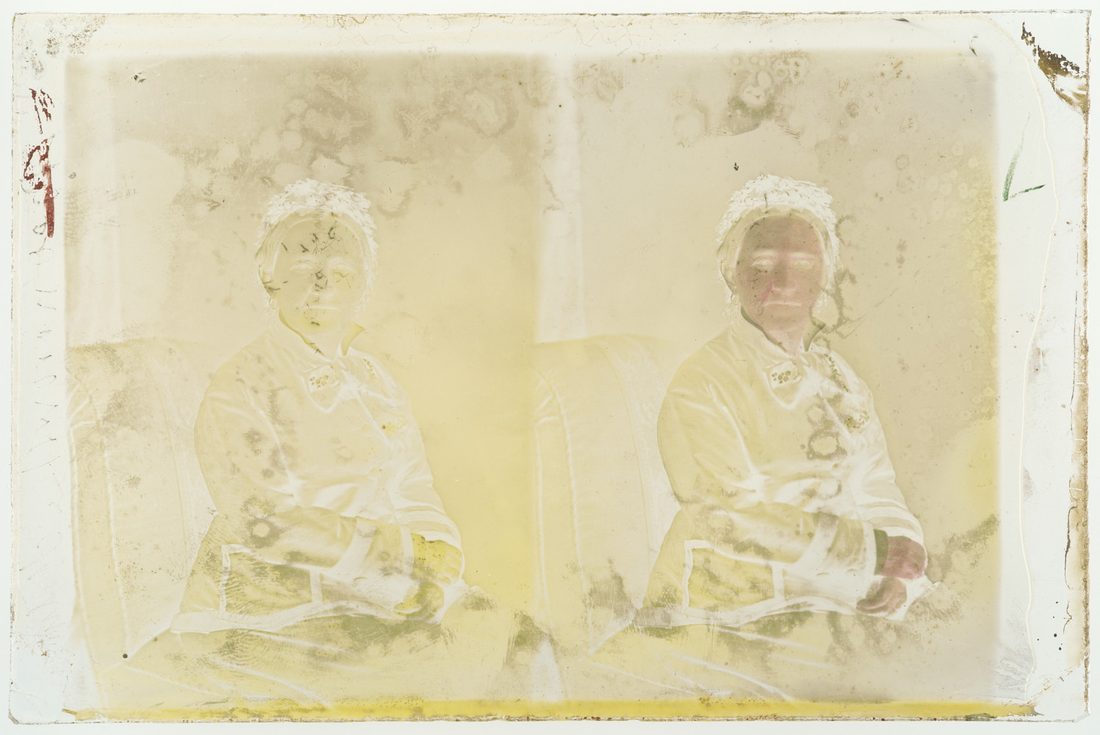
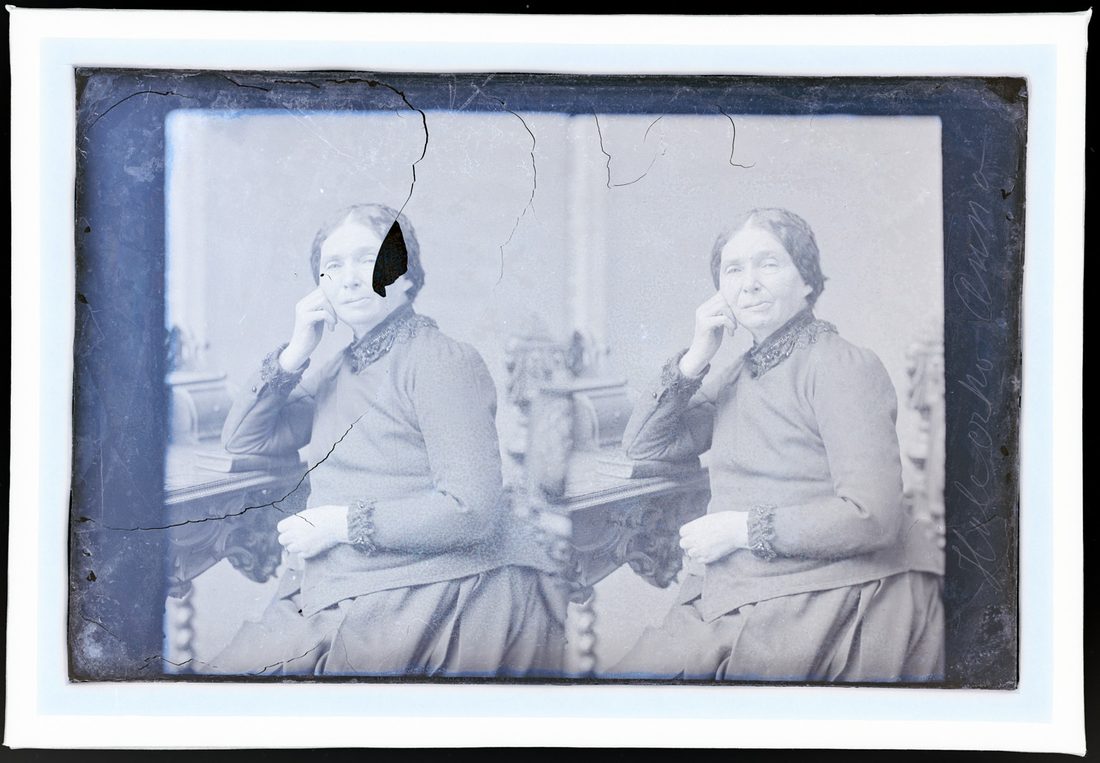
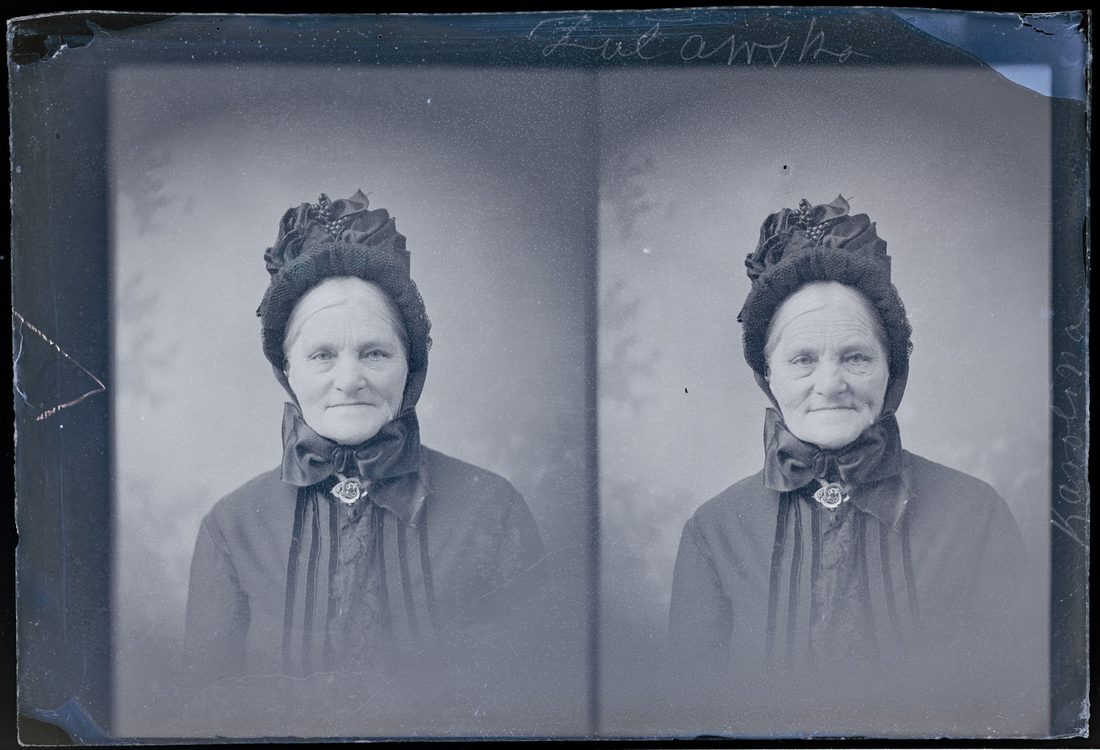
A question mark next to a surname indicates an uncertain identification. Proposals generated by the model should be marked in the same way (see item 7).
4Draft record generated by the model
AI is introduced at this stage. A vision-language model receives the image, the text read from the verso and information on the series to which the object belongs. It returns a draft record in a fixed format: working title, type of shot, number of persons, elements of dress, date range and keywords from the museum’s controlled vocabulary. Each field includes a confidence score and information on its source. The curator reviews and corrects the draft, and then approves or rejects it.
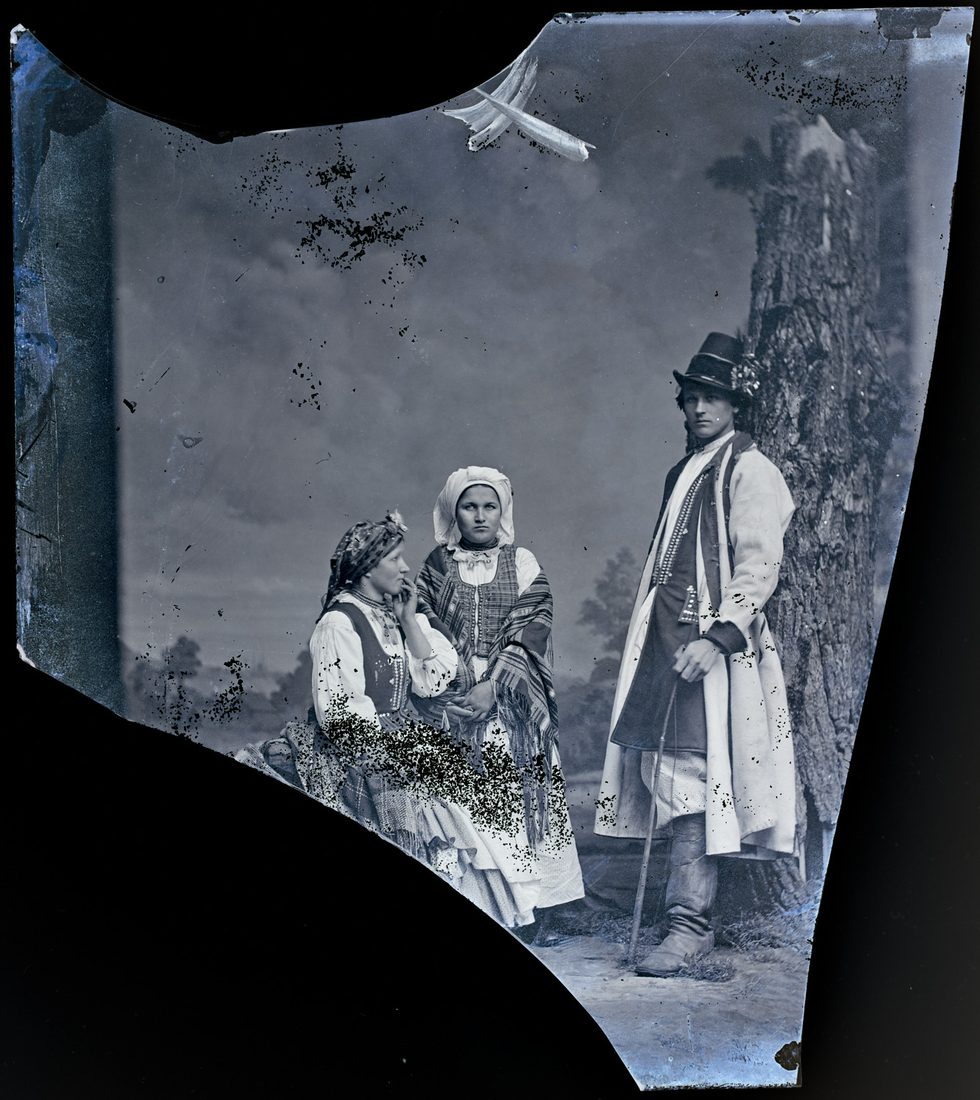
The greatest benefit is obtained for objects with descriptive titles, such as “Mężczyzna w stroju polskim, portret” (‘Man in Polish costume, portrait’) or “Mężczyzna i dwie kobiety w strojach ludowych, portret” (‘Man and two women in folk costume, portrait’). The title remains unchanged, and the model adds fields that later allow the collection to be filtered: elements of dress, type of background, framing.
// model response format (fields only, without example values)
{
  "working_title":      "text",
  "object_type":        "glass negative | print | reproduction of artwork",
  "framing":            "bust | half-length | full-length | group",
  "number_of_persons":  number,
  "dress":              ["term from museum vocabulary", …],
  "dating":             { "from": year, "to": year, "basis": "verso | dress | technique" },
  "verso_text":         "transcription",
  "confidence":         { "field": 0.0–1.0, … },
  "source":             "model:name@version · prompt:v3 · date",
  "status":             "to be verified"
}
5Grouping of exposures from a single session
Studio sessions seldom ended with a single exposure. A model that compares images on the basis of their vector representations (embeddings) groups photographs from the same session and proposes to the curator a joint description of exposures identified as one series. The description is written once, and the differences between exposures are added in a single sentence. The method also reveals duplicate files and repeated scans.
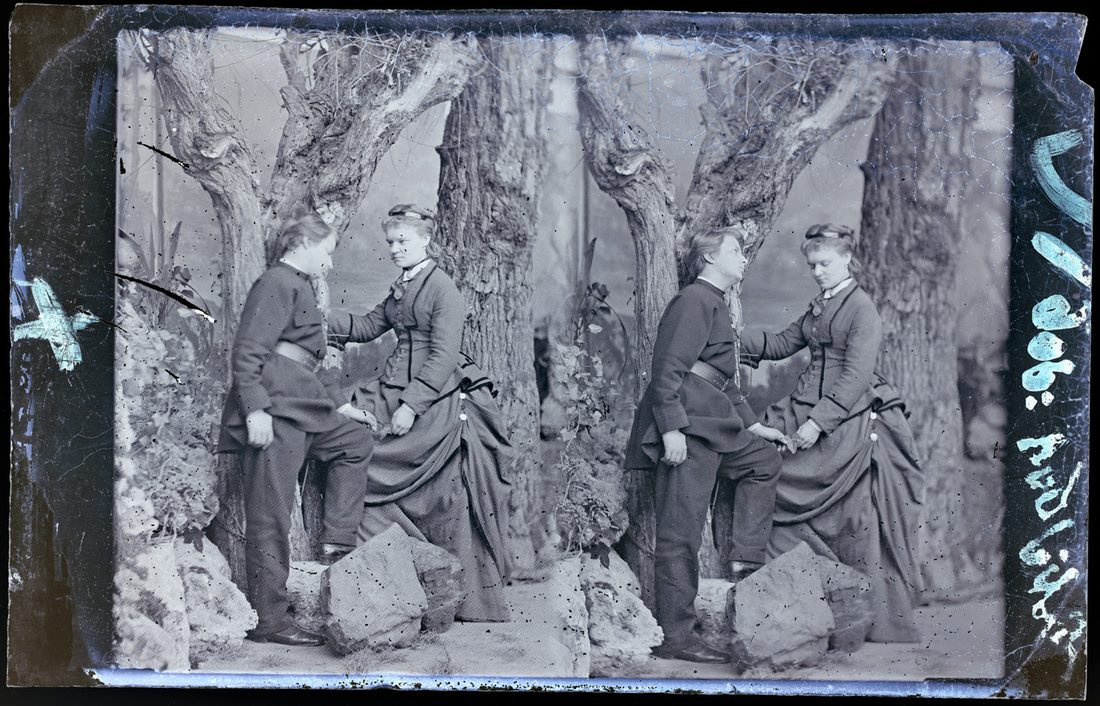
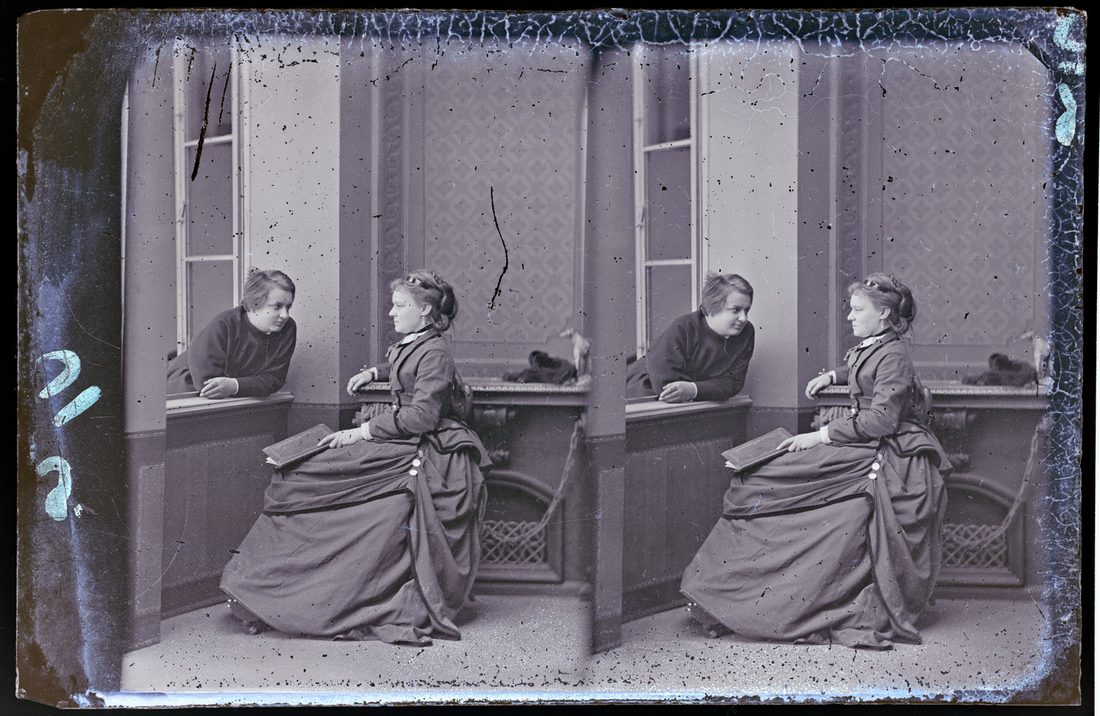
Two negatives with identical title and date. A similar pair is formed by two reproductions of Kossak’s painting of the horse Przedświt (F_F_45649 and F_F_45651).
6Persons and places as authority records
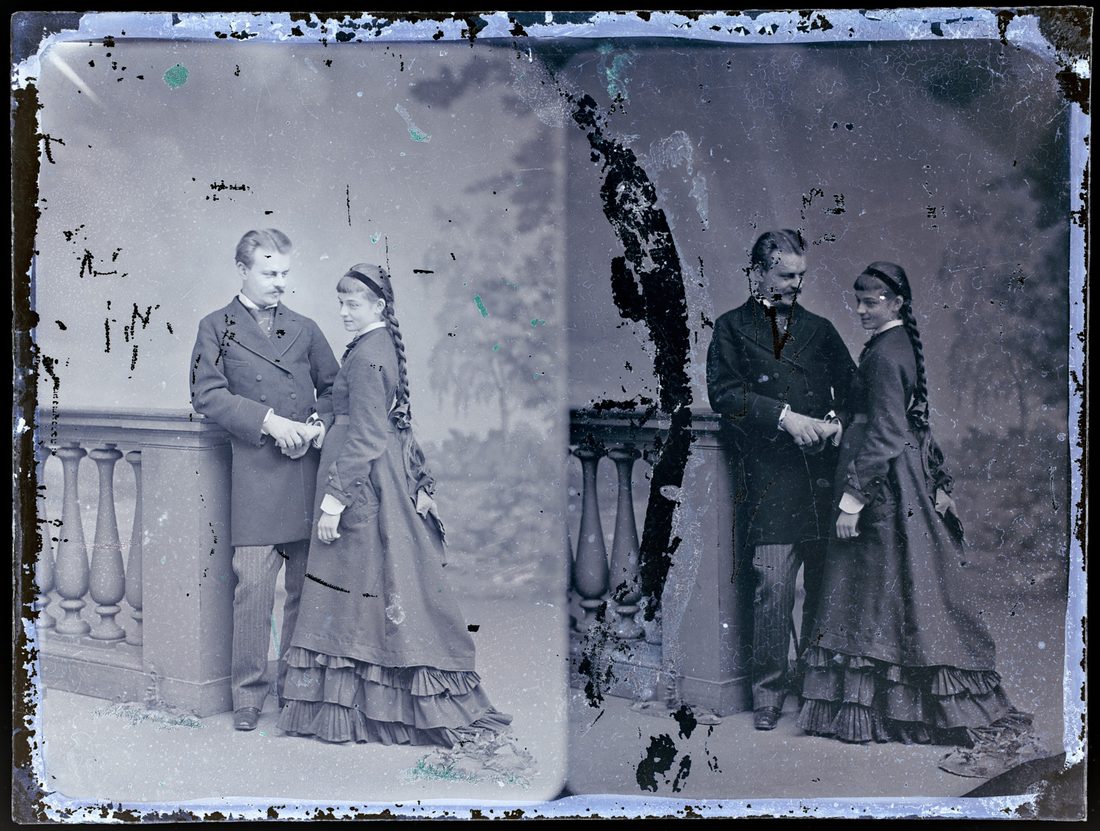
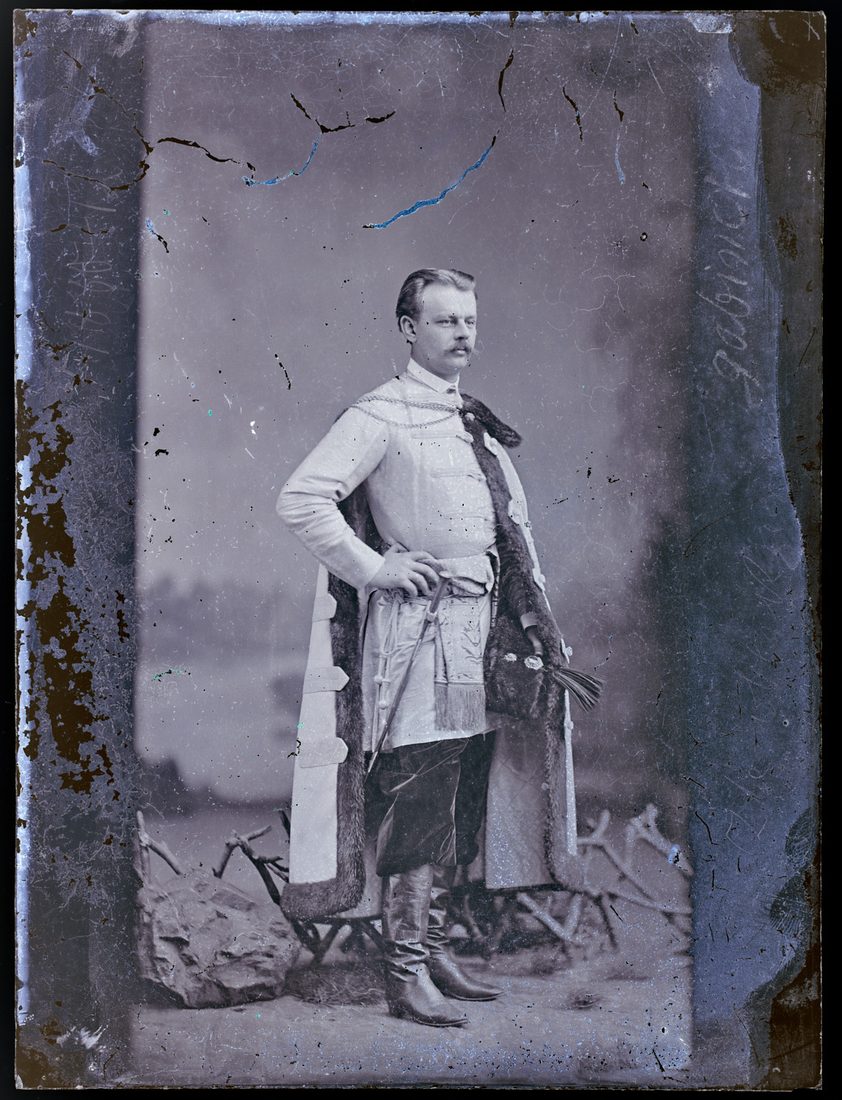
A person who appears in several photographs should be recorded in the authority file as a separate record (Wikidata, VIAF or an in-house vocabulary), not merely as part of a title. In the analysed set of several dozen objects, Artur Władysław Potocki appears at least twice: in 1877 with Róża Potocka and in 1880 in Polish costume. Linking both photographs to a single record makes it possible to display all his portraits in chronological order. Face comparison can assist in identifying persons in uncaptioned photographs, but the decision rests with the curator. For twentieth-century photographs, image rights and the GDPR must also be taken into account.
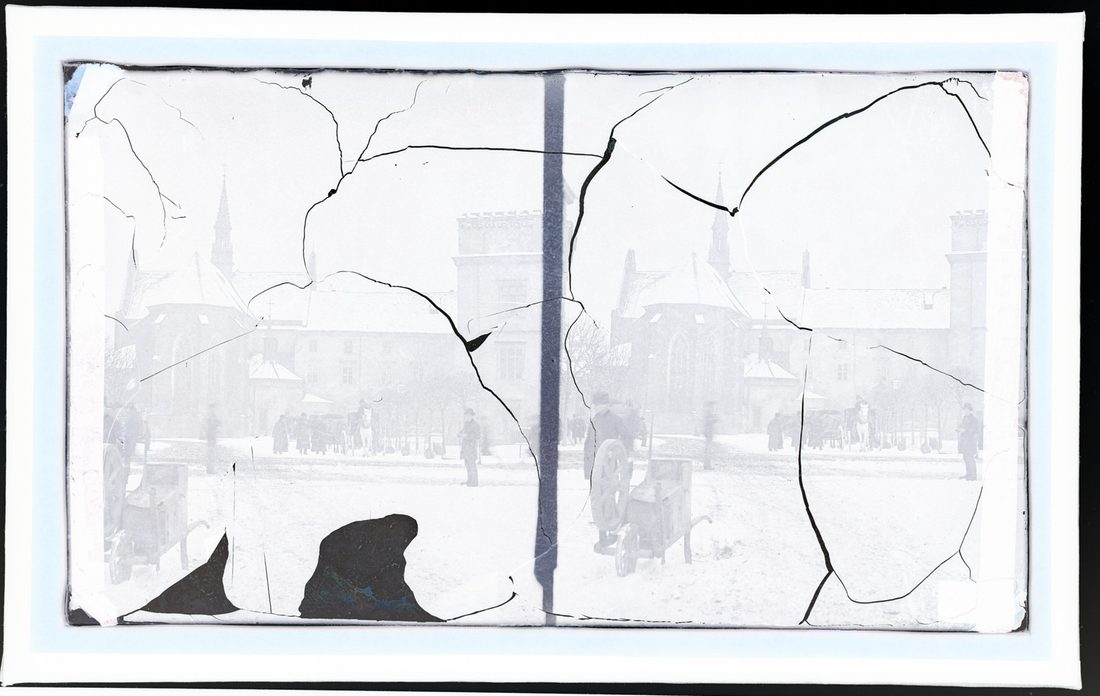
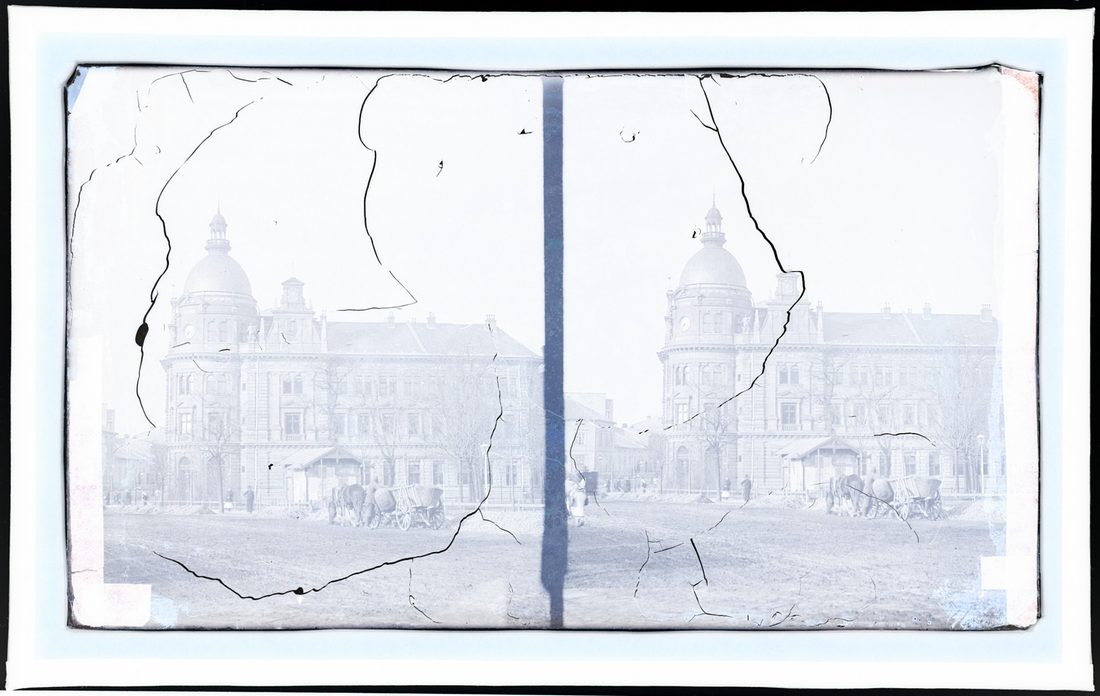
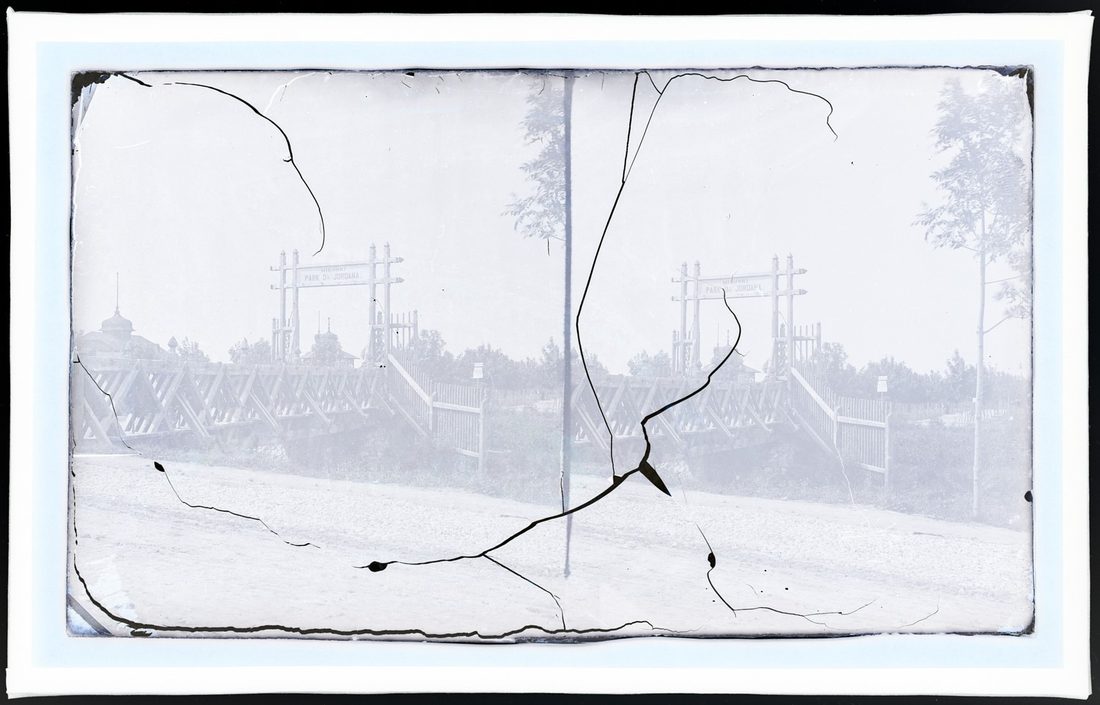
The identification of places is simpler, since image rights do not apply. The Franciscan Church, the Main Post Office on Westerplatte Street and the gate of Jordan Park have records with geographical coordinates in Wikidata. Photographs linked to them can be presented on a map or compared with the present-day appearance of these places.
7Field-level data provenance
If data generated by a model enter the catalogue, the source of every field must be recorded: a human, a model (with its name, version and the prompt used) or an import from another system, together with a status: proposed, approved, corrected. This makes it possible to:
- publish approved fields ahead of the remaining ones,
- withdraw in a single operation all data generated by a model whose quality has proved insufficient,
- identify the fields most frequently corrected by curators.
Acceptance thresholds are set on this basis. Plate dimensions or orientation can be accepted automatically at high confidence, whereas persons, dating and content always require human approval.
8Publication through open standards
Publication can take weeks if a separate export is prepared for each service. A preferable solution is a single data source exposed through IIIF (images with zoom and annotation) and OAI-PMH or an API (metadata), with automated export to aggregators. The objects discussed in this article are available on Europeana with a public domain mark and direct links to the files, so locating them and verifying their licences took only a few minutes.
6. Estimated effect on backlogs
The scenario assumes 10,000 objects awaiting processing and two full-time staff, corresponding to approximately 3,200 working hours per year. Three variants are compared: no changes (55 minutes per object), an upgrade of photographic equipment only (45 minutes) and implementation of all eight changes (25 minutes). In the third variant, the first three months are taken up by implementation, during which the team continues to work according to the existing procedure.
Number of objects remaining to be processed
10,000 objects, 2 full-time posts (16,000 working minutes per month). The eight changes take effect from the fourth month.
- All changes (25 min)
- Equipment upgrade only (45 min)
- No changes (55 min)
Data table
| Month | All changes | Equipment upgrade | No changes |
|---|
An equipment upgrade alone shortens the time needed to clear the backlog by six months, and implementation of all changes by almost eighteen months, despite producing no effect in the first quarter.
7. Pilot study design
Before a tender for a system is announced, a three-month pilot study on a single series is recommended, for example 300 portraits from one photographic studio.
- First month: measurement of the actual duration of each stage, and introduction of identification codes and automated quality control (items 1 and 2).
- Second month: description of half of the series using drafts generated by the model (items 4 and 5), and of the other half according to the existing procedure.
- Third month: comparison of the two halves of the series and a decision on further action.
Proposed indicators:
| Indicator | Purpose of measurement | Data source |
|---|---|---|
| Median record processing time (min) | Time from file creation to approval of the description | Timestamps in the collection management system, separately for each half |
| Share of fields approved without corrections | Quality of model proposals | Field-by-field comparison of the draft with the approved version |
| Post-publication corrections | Verification that faster processing does not reduce quality | Changes to records within 3 months of publication, in both halves |
| Rejections during the session | Effectiveness of automated quality control | Files rejected immediately compared with those corrected later |
| Fields with a recorded source | Degree of implementation of item 7 | Share of fields with source and status completed |
8. Risks and limitations
- Errors stated with confidence. The model formulates its output with equal confidence whether it is correct or whether it describes a garment with an anachronistic term or misreads a surname on the verso. For this reason, the status “to be verified” and the recording of the source are mandatory.
- Approval without review. After fifty correct proposals, the fifty-first receives less attention. This can be counteracted by periodically inserting records with a deliberately introduced error into the queue.
- Stereotypes. Models reproduce them in descriptions of dress, social class and origin. The museum’s controlled vocabulary and editorial rules take precedence over wording that the model regards as natural.
- Face recognition and the GDPR. Recognising persons in twentieth-century collections requires legal consultation. In the pilot study it is recommended that it be restricted to photographs taken before 1900.
- Location of file processing. Public domain objects may be processed using cloud services. Objects protected by copyright and deposits should be processed with a model run on the institution’s own server.
- Conservation. None of the changes described shortens conservation time. The schedule should not assume an increase in the productivity of conservators.
Analyses planned after the pilot study
- Distribution of record processing time in both halves of the series, since the mean conceals objects that require around an hour of work.
- Share of proposals accepted without changes, separately for title, dating, persons, places and technique.
- Relationship between model confidence and dating accuracy, as a basis for setting the automatic acceptance threshold.
- Flow of records between statuses: proposed, corrected, approved, rejected.
- Timeline showing the dating of the entire series with uncertainty intervals.
The highest-priority action in the first week is to measure the duration of each stage in the current workflow. Without such measurement, any discussion of equipment or AI rests on conjecture; this also applies to the model presented above.
Sources
- MuFo collections catalogue and Europeana (public domain photographs).
- MuFo: conservation and digitisation of 100 glass negatives by Walery Rzewuski (in Polish).
- The MNW Apollo project on the CPPC (Centrum Projektów Polska Cyfrowa) website and a note on dzieje.pl (in Polish).
- Project Glashelder, Ghent.
- Moore, Peters: photographing negatives at Texas State University (2018).
- Scanner versus camera in the digitisation of glass negatives (TownsWeb, Postal Museum).
- Smithsonian: conveyor-belt digitisation (2015).
- FADGI quality levels: an overview.
- NIMOZ recommendations on digitisation projects (2011) (in Polish).
- The use of AI for 8,000 glass negatives at the National Archives of Estonia.
Photographs: Muzeum Fotografii w Krakowie (Museum of Photography in Kraków), public domain, via Europeana. Charts marked “model estimate” present the author’s estimates.